
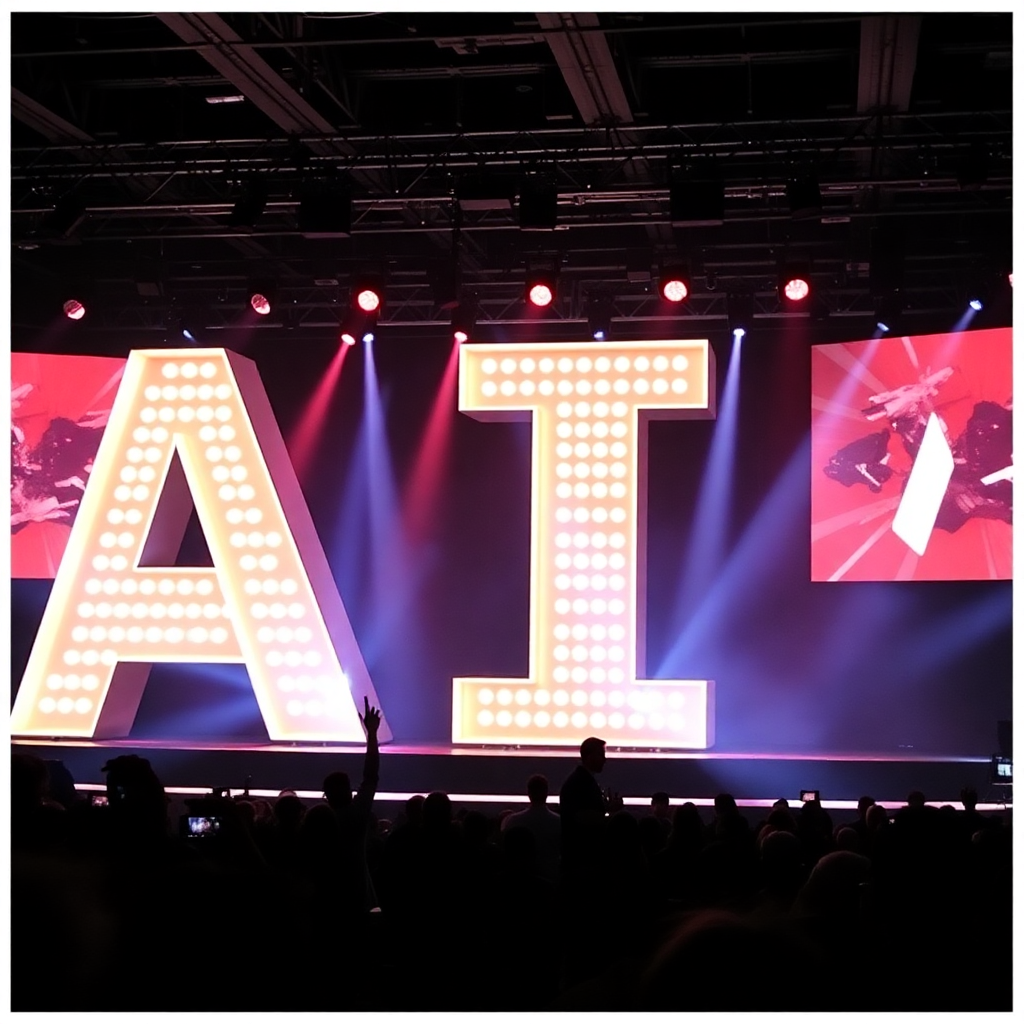
TL;DR
What’s the impact of AI and live events? AI is getting very good at corporate communication, such as emails, videos, personalized content, post-event follow-up. It handles all of it faster and cheaper than a human. That’s exactly why your live event has become the most valuable corporate communication and marketing asset. When everything else can be automated, the room that can’t has even greater valuable. And producing it well matters more than ever.
______________________________________________________________________
Concerning AI and live events, your face-to-face meeting or event is now irreplaceable. Because the more AI does, the more your live event matters.
Here’s why: AI has moved into the communication stack of most organizations faster than anyone expected. It writes the pre-event emails. It builds the attendee segments. It drafts speaker prep documents, assembles PowerPoint slides, and fires off the post-event communication. A lot of what used to require a coordinator now takes a prompt.
That efficiency is real. But it comes with an unexpectedly positive side effect.
When routine communication becomes automated, every automated touchpoint becomes less differentiating. The inbox is full of content personalized by an algorithm. The video message looks polished but feels hollow.
Everyone can feel it, even if they can’t name it. And when everything starts to sound the same, the thing that sounds different is a room full of people who show up.
That’s your event. And the pressure on it just went up.
AI can generate ideas and analyze trends, but it cannot design emotional experiences. The elements that shape how attendees feel during an event are difficult for an algorithm to replicate.
Live event production requires rapid decision-making in dynamic environments. Production teams constantly respond to changing conditions, technical challenges, and audience reactions. In that regard AI has changed nothing.
No algorithm can make a keynote land differently than rehearsed and adjust on the fly. There’s no automated substitute for the instinct that tells a producer speed up or slow down intros and speaker transitions.
A machine can write words. It can’t change the speaker, the location, the atmosphere and the moment. That judgment, the one that separates a forgettable afternoon from a day people talk about for months, lives entirely with the humans in the room and behind the gear.
You know what happens the moment C-suite names appear on the attendee list. Expectations shift. That’s been the case for years. But now there’s an additional layer.
A live experience, whether an all-hands, a sales kickoff, a leadership summit, or a product launch, remains the single most credible environment a brand can create. It is the moment where people don’t just consume content but start believing in something together.
Your senior leaders know this. Live events build trust in leadership, create belonging among dispersed teams, and turn employees and stakeholders into active advocates.
When the CEO walks out on that stage, the production around them is either reinforcing that message or quietly undermining it. The technical execution must match the stakes. It always did. Now the stakes are higher.
More of your audiences use and respond to recommendation engines. Hence, they expect the same from events: sessions curated to their role, connections that make sense, content that feels designed for them. They arrive having spent the week watching broadcast-quality content on every screen they own.
Video mapping, LED displays, interactive screens, and elevated lighting are moving from optional add-ons to standard expectations. What used to read as impressive now read as table stakes.
AV has transitioned from a technical support role into a core strategic partner for event design and execution. Today’s audiences – especially younger members – expect experiences that feel seamless and sophisticated. That means production systems are increasingly responsible for crafting those experiences, shaping everything from storytelling visuals to interactive touchpoints that make events deliver fresh, vibrant experiences.
This is not about spending more for the sake of it. It’s about understanding what your audiences expect the event to do. If the room is being asked to carry organizational culture, align a dispersed sales force, or rebuild trust in a leadership team following a hard year, a simple projector and a podium are not up to the job.
It’s a question we ask consistently. Now it’s worth asking more seriously than it was even a few years ago.
Of course, not every internal gathering need full staging. A lunch-and-learn is still a lunch-and-learn. But the events where your organization is asking people to believe in a company’s direction and in their leadership, those events are shows. Treat them accordingly.
AI didn’t replace the craft of events. It cleared some of the clutter around it. What’s left is the work that only a skilled production team can do: creating room for an experience that an algorithm can’t.
When it’s time to call it a show, make sure the production matches the moment.