
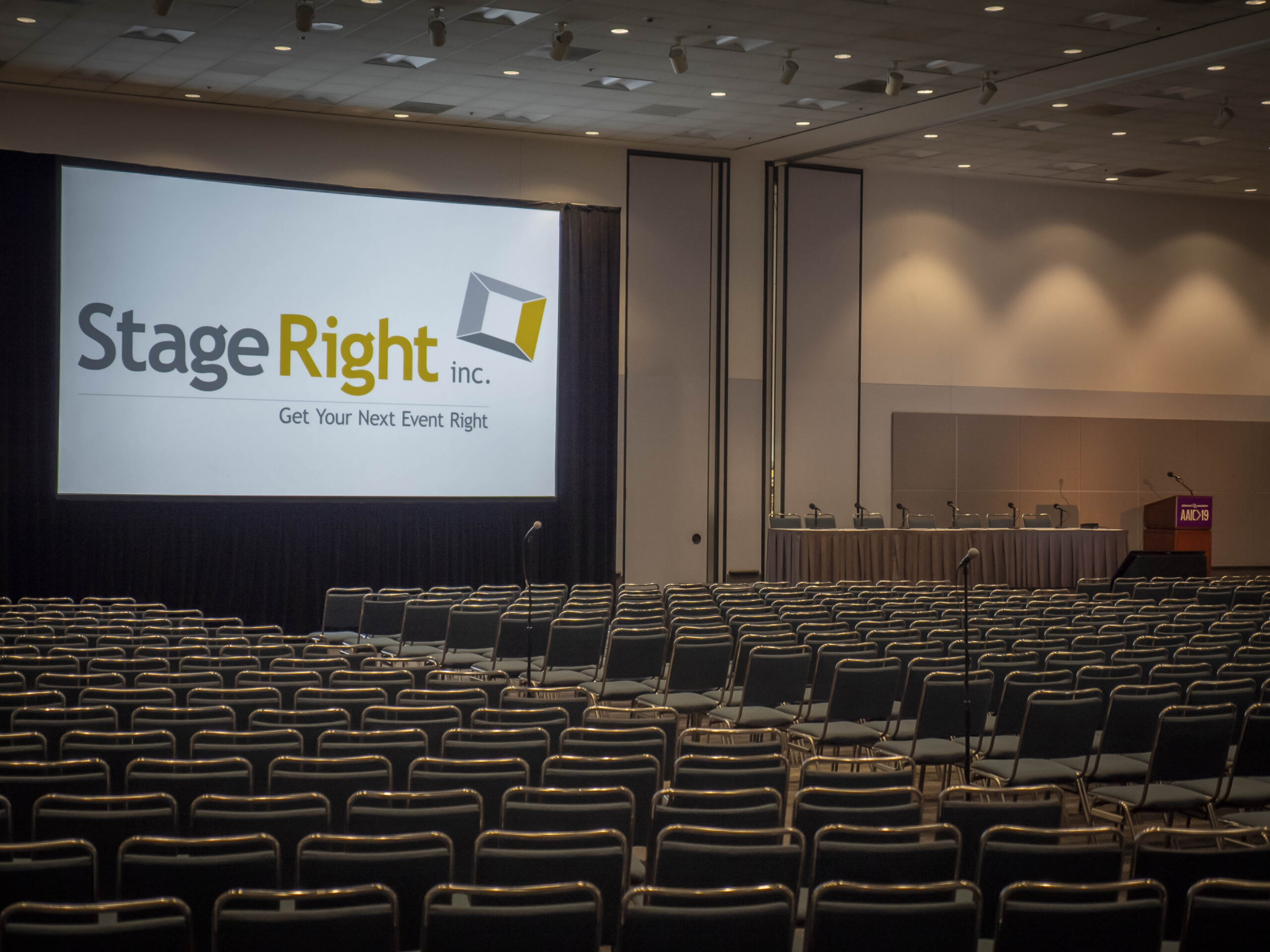
TL;DR
Most planners have run 100-person meetings. But what happens with 500-person events? The jump isn’t just the same setup “with more”. Sound, video, staging, lighting, power, crew, rehearsal time, redundancy, and load-in all shift into a different category of production. Planners who budget a 500-person event, like a scaled-up version of a smaller one, are usually the ones who get blindsided on-site. Knowing where these thresholds sit before you sign a venue contract can save your event, and your budget.
Most event planners have run a 100-person meeting. Running a 500-person event may be a new experience, and the differences between the two aren’t always obvious early in planning.
As attendance, room size, and expectations come into focus, certain production thresholds become clearer. Around the 500-attendee mark, many corporate and association events reach a point where production needs no longer increase in direct proportion to audience size.
A meeting doesn’t simply get harder at a steady rate as the room fills up. It reaches a point where equipment, staffing, and planning requirements emerge that weren’t necessary for a smaller event.
We’ll walk through what changes and why.
Most meeting planners don’t want to get into the details of audiovisual (AV) equipment the way we do. You need to know where surprises tend to hide so you can plan for them rather than discover them the week of your event.
If you’ve planned a 100-person meeting, you already know the basics: a solid sound system, a projector or two, a competent technician, and a run-of-show.
A sound system that covers a smaller room evenly may leave dead zones and inconsistent volume in a room serving 500 attendees. Longer distances between speakers and listeners, sound reflecting off hard surfaces, and attendees seated outside the system’s optimal coverage area all affect audio clarity.
At this scale, additional speakers—including delay speakers that reinforce sound farther from the stage—and coverage designed for different areas of the room may become necessary. Acoustic planning also needs to begin earlier because ceiling height, wall materials, and room shape affect the sound throughout the space.
As the distance to the back row increases, attendees may struggle to see the presenter’s face or read presentation slides. Large-format visual support can shift from a premium add-on to a baseline requirement.
Camera operators, a video switcher, image magnification (live video of the presenter displayed on screens), and additional screens throughout the room may become part of the production plan. A single display that works for a smaller meeting may no longer be enough.
Display technology matters more, too. High-output projection in the 12,000–20,000-lumen range may be needed to keep images bright and legible in a larger room with ambient light. Modular LED walls offer another option when sharper, more flexible visuals justify the investment.
As audiences grow, stage design becomes more than an aesthetic choice. It helps shape the attendee experience.
A stage that feels appropriately sized for 100 people can look undersized in a ballroom seating 500. Stage dimensions, scenic elements, audience layout, and sightlines need to work together so attendees feel connected, whether they’re seated in theater rows, classroom rows, or at round tables.
Good production isn’t only about whether people can hear the presenter. It’s about whether every seat feels like part of the event.
At smaller meetings, lighting may serve one primary purpose: making the presenter visible.
At a 500-person event, lighting often takes on a larger role. Presenters need appropriate lighting for cameras, keynote moments may need emphasis, and the room needs enough visual energy to hold attention throughout the day. Lighting also shapes how professional the event looks in the photos and videos that outlive it.
AV equipment at smaller events may run comfortably on standard venue circuits. At a 500-person event, more speakers, larger displays, and additional lighting can change the power requirements.
The key is confirming which circuits are available and what else shares them. Outlets may share circuits with coffee warmers, hot plates, or other equipment. The AV team should verify that the power supply is appropriate for the production rather than assume nearby outlets will be sufficient.
Power is also a common budget surprise because the requirements may not become clear until someone calculates the electrical load. Dedicated power distribution—and, where needed, backup power—can add costs that weren’t included in the first draft of the budget.
The same planning principle applies to internet connectivity. Presentation laptops, polling platforms, event apps, livestreams, and presenter downloads all depend on reliable service. A venue’s standard internet package may not support those needs once hundreds of devices are competing for access. Confirm capacity and production requirements early rather than assuming the standard package will be enough.
It’s tempting to think a bigger event just needs a little more crew. In practice, the change is often more substantial.
A 500-person production may need dedicated audio support, additional video operators, lighting technicians, and a show producer coordinating the event in real time. These responsibilities may require separate specialists rather than one experienced technician covering the entire show.
A larger production also makes rehearsal more important. Speaker walk-throughs, microphone checks, presentation testing, and cue verification help the crew catch problems before the audience does.
At a smaller event, a technical problem may be resolved with a quick fix and a short pause. At a 500-person event with executives, clients, or paying attendees in the room, dead air or a dropped video feed can carry greater business consequences.
Backup microphones, redundant playback systems, spare laptops and adapters, and protected power supplies help reduce that risk. At this scale, production planning is as much about preparing for failures as it is about providing equipment.
More rigging, more equipment, and more cable runs can make “we’ll set up the morning of” an unrealistic plan.
Larger productions need sufficient venue access, coordination with facility staff, and time to test every system—not just install it—before doors open. Setup and testing requirements should be part of the venue and production discussions from the start.
Plenty of venue AV teams do excellent work supporting meetings of every size. The question isn’t simply whether a venue offers AV services. It’s whether the available equipment, staffing, and production capabilities match your event’s complexity.
As production requirements become more sophisticated, consider whether additional resources or specialized expertise would help deliver the experience you want.
You’ll also need to balance those requirements against your budget. A good AV partner should help you find the right level of production for your event, not just recommend the biggest setup.
A 500-person event doesn’t have to be stressful or over budget. It does need to be planned around its own requirements rather than treated as a larger version of a small meeting.
Planners are better positioned when they understand those requirements before budgets, timelines, and venue contracts are finalized—not after a change order arrives two weeks before show day.
Before committing, ask:
• Can every attendee hear the presenter clearly?
• Can the back row read the presentation slides?
• Do the stage, screens, and seating layout provide clear sightlines?
• Have power and internet requirements been confirmed?
• Is enough crew scheduled for setup, rehearsals, and the live event?
• Does the schedule allow enough time for testing and rehearsal?
• What happens if a microphone, presentation laptop, or video feed fails mid-session?
These questions aren’t about technology for its own sake. They’re about giving every attendee, from the front row to the back corner, a consistent experience.
What changes when an event grows from 100 to 500 attendees?
A 500-person event may require more extensive sound coverage, larger screens, camera support, dedicated production crew, and additional setup and rehearsal time. The change isn’t simply more equipment: a larger room and a more complex program can introduce new production requirements.
Is 500 attendees a fixed threshold for more complex AV production?
No. Audience size is a useful planning benchmark, not a fixed technical cutoff. Room dimensions, seating layout, presentation format, and production expectations help determine what equipment and staffing an event needs.
What AV requirements should planners confirm before signing a venue contract?
Confirm sound coverage, screen visibility, power availability, internet capacity, venue access for setup, and production staffing. Include time for system testing and rehearsal so the schedule accounts for more than equipment installation.
Can a venue’s in-house AV team handle a 500-person event?
A venue’s in-house AV team may be able to support a 500-person event. The important question is whether its equipment, staffing, and production capabilities match the event’s requirements—not simply whether the venue offers AV services.
What backup equipment should planners discuss with their AV provider?
Discuss backup microphones, presentation laptops, playback systems, adapters, and power protection. Ask the AV provider what happens if a critical component fails during a session and how the crew will keep the program moving.
If you’re earlier in your planning journey, our checklist for a successful 100-person meeting is a good place to start. But once you’re crossing into the 500-attendee range, take a closer look at what the room truly demands before the budget and the contract are already locked in.